We've all heard the promise: "Online education democratizes learning." And in many ways, it has. But behind the impressive enrollment numbers and platform growth metrics lies an uncomfortable truth—millions of learners are struggling silently, and most platforms aren't designed to help them.
This isn't about bad internet connections or missing features. It's about fundamental design choices that prioritize content delivery over learning outcomes, scalability over human connection, and enrollment metrics over student success.
Let's unpack what learners are actually dealing with—and explore how education technology must evolve to truly serve them.
The 6 Core Struggles of Online Learners
Digital Fatigue & Declining Engagement
Endless video lectures, repetitive content formats, and passive consumption leave learners mentally exhausted and disengaged.
Isolation & Lack of Human Connection
Missing the spontaneous discussions, real-time peer interaction, and emotional support that physical classrooms naturally provide.
One-Size-Fits-All Content
Standardized courses that ignore individual learning speeds, preferences, and prior knowledge leave many students behind or bored.
Delayed Feedback & Unanswered Questions
Hours or days waiting for responses to doubts kills momentum and creates compounding confusion.
Self-Discipline & Time Management
Without structured environments and accountability, learners struggle to maintain consistent study habits and meet deadlines.
Technical Barriers & Accessibility Gaps
Unreliable internet, outdated devices, and platforms not designed for accessibility exclude millions from quality learning.
The Engagement Crisis: More Than Just "Boring Content"
When learners disengage, it's easy to blame the content. But the reality is more nuanced. Digital fatigue isn't about screen time—it's about passive, one-directional learning experiences that provide no feedback loop, no interaction, and no sense of progress.
What Breaks Engagement:
- Hour-long video lectures with no interaction checkpoints
- Static content that doesn't adapt to learner responses
- No immediate feedback on understanding or progress
- Assessments that feel punitive rather than formative
What Sustains Engagement:
- Interactive live sessions with real-time Q&A
- Personalized difficulty that matches skill level
- Immediate feedback loops and progress visibility
The Isolation Problem: Learning is Inherently Social
Human brains evolved to learn in social contexts. We learn by observing others, by asking questions, by explaining concepts back, by struggling together. Online platforms that reduce learning to solo video consumption are fighting against our fundamental nature.
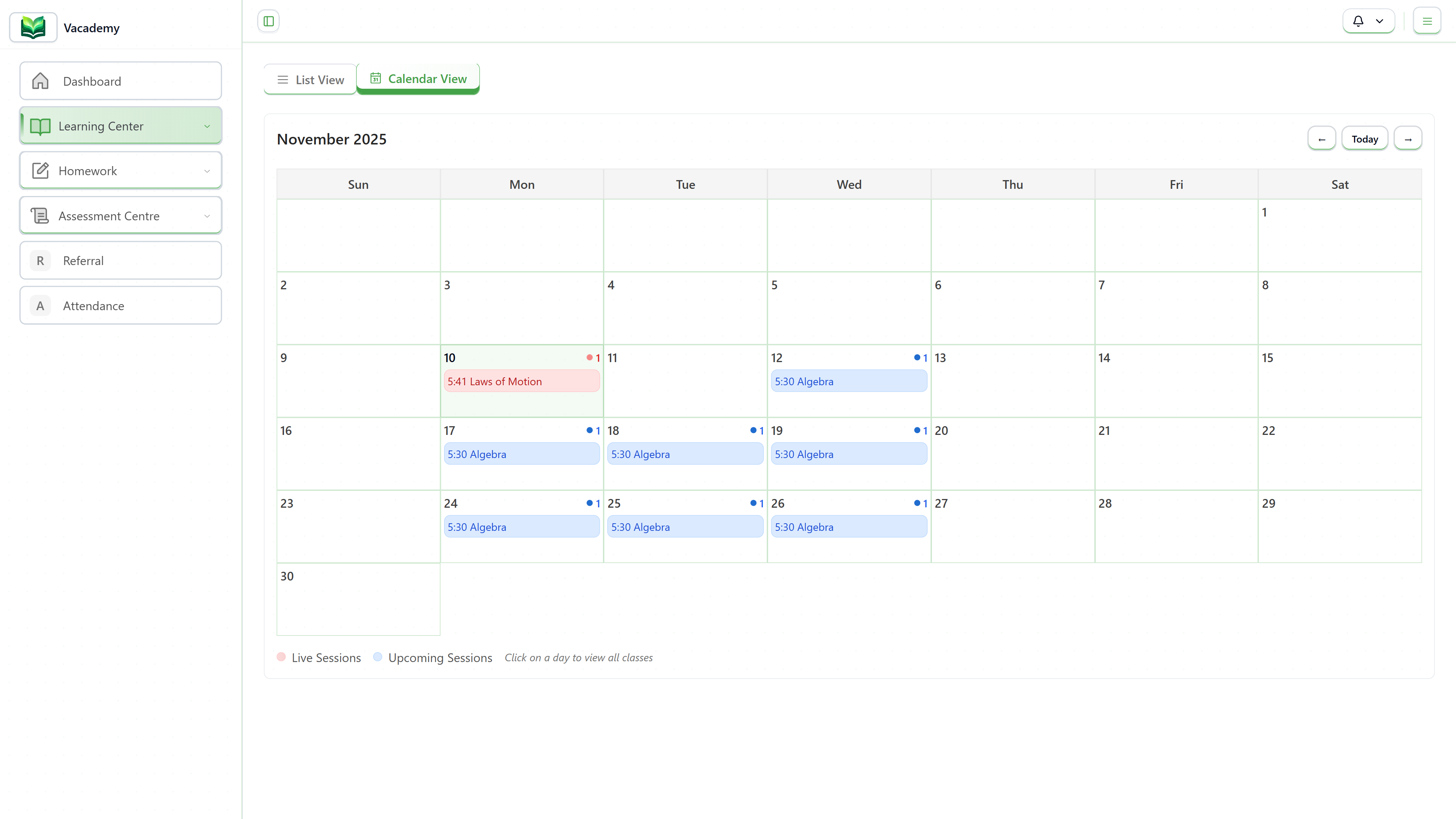
Vacademy's learner dashboard: Never miss a live session
Why This Matters:
Studies consistently show that learners with strong peer connections have higher completion rates, better knowledge retention, and report more satisfaction with their learning experience.
The Connection Gap
Discussion forums and comment sections aren't enough. Learners need structured opportunities for real-time interaction, collaborative problem-solving, and emotional support from peers and mentors who understand their journey.
The Doubt Bottleneck: When Questions Go Unanswered
A confused learner who can't get help is a learner who will fall behind—and eventually drop out. Yet most platforms treat doubt resolution as an afterthought, leaving students in limbo while their questions sit in unmonitored forums or overflowing email inboxes.
How Vacademy Solves This:
What Platforms Often Ignore (And Why It Matters)
| Area | What's Often Ignored | What Actually Works |
|---|---|---|
| True Personalization | Platforms deliver templated content without adapting to individual progress, learning style, or knowledge gaps. | AI-powered adaptive learning that adjusts difficulty, recommends content, and creates personalized pathways. |
| Human Connection at Scale | Discussion forums feel transactional. Live sessions are one-way broadcasts. Peer collaboration is an afterthought. | Integrated doubt management, real-time interaction tools, and community features that foster genuine connections. |
| Immediate Support | Students wait hours or days for help, losing motivation and falling behind while their questions go unanswered. | Structured doubt systems with clear assignment to educators, AI-assisted responses, and accountability tracking. |
| Educator Empowerment | Platforms assume teachers will figure it out. Little support for lesson planning, content creation, or engagement strategies. | AI tools that help educators create content faster, plan lectures intelligently, and get feedback on their teaching. |
| Outcome Measurement | Focus on course completion rates rather than actual learning outcomes, skill development, and knowledge retention. | Comprehensive analytics that track understanding, identify weak areas, and measure real progress over time. |
| Seamless Experience | Learners juggle multiple tools—LMS, video calls, payments, communication—creating friction and context-switching. | Unified platform where content, live sessions, assessments, communication, and payments coexist seamlessly. |
It's Not Just Learners—Educators Struggle Too
Here's what's often missed: when educators struggle, learners suffer. Most platforms dump the burden of content creation, engagement, and administration on teachers without providing adequate support.
What Educators Need:
- AI-assisted content creation that doesn't replace teaching but accelerates preparation
- Automated administrative tasks like attendance, reminders, and progress tracking
- Intelligent insights about student performance and content effectiveness
- Feedback on teaching to continuously improve delivery and engagement
Vacademy's Approach: The Vsmart AI Suite helps educators generate courses, quizzes, and lecture plans in minutes—not hours. Vsmart Feedback analyzes teaching recordings to provide actionable improvement suggestions.
The Path Forward: Learner-Centric Design
The future of online education isn't about adding more features—it's about fundamentally rethinking who the platform is designed for. True learner-centric platforms prioritize outcomes over enrollment, connection over content, and support over scale.
AI That Personalizes
Adaptive learning paths, personalized question difficulty, and AI-generated content that meets learners where they are.
Connection at Scale
Live sessions, structured doubt resolution, and community features that foster genuine human connection without sacrificing scalability.
Automation That Serves
Automated attendance, reminders, grading, and reporting that frees educators to focus on what matters: teaching and mentoring.
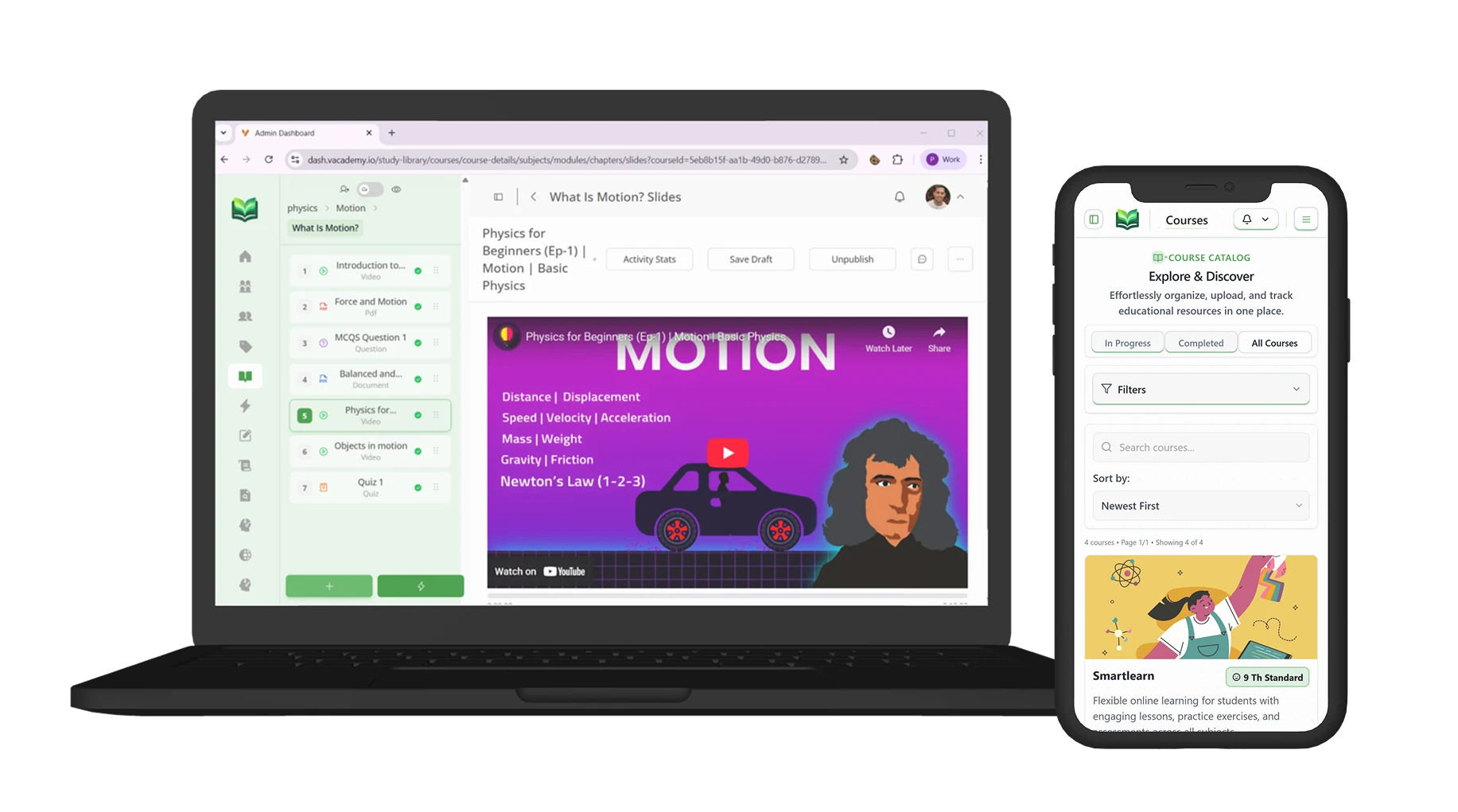
Vacademy: A unified platform for learning, teaching, and growing—across every device
It's Time for Learning That Actually Works
Your learners deserve more than passive video consumption and unanswered questions. See how Vacademy addresses the struggles that other platforms ignore.
Frequently Asked Questions
Why do online learners have such high dropout rates?
The 40%+ dropout rate in online courses stems from multiple factors: digital fatigue from passive content consumption, lack of human connection and peer support, delayed feedback on questions and doubts, rigid one-size-fits-all content that doesn't adapt to individual needs, and poor time management without structured accountability. Most platforms focus on content delivery rather than learning outcomes, failing to address these fundamental human needs.
How does personalization actually help learners?
True personalization goes beyond recommending content. It means adapting difficulty levels to prevent frustration or boredom, identifying knowledge gaps and addressing them proactively, creating learning paths that respect individual pace and prior knowledge, and providing feedback that's specific to each learner's performance patterns. AI-powered platforms like Vacademy can generate personalized assessments and adjust content delivery based on real-time learner responses.
What makes live sessions more effective than recorded content?
Live sessions enable real-time interaction, immediate doubt resolution, and the spontaneous discussions that recorded content can't replicate. They create accountability (scheduled time), social presence (seeing peers), and the ability to ask follow-up questions. Vacademy integrates live sessions with Zoom, Google Meet, and YouTube Live, along with automated attendance tracking and timezone-aware scheduling.
How can platforms better support educators?
Educators need AI tools that accelerate content creation without replacing teaching judgment, automated administrative tasks (attendance, reminders, grading), structured systems for managing student doubts at scale, and feedback on their teaching effectiveness. Vacademy's Vsmart AI Suite helps educators create courses and assessments in minutes, while Vsmart Feedback analyzes teaching recordings to provide improvement suggestions.
Is it possible to maintain human connection at scale?
Yes, but it requires intentional design. This means structured doubt management systems with clear assignment and tracking, integrated live sessions with real interaction (not just broadcast), community features that foster peer-to-peer support, and automation that handles logistics so educators can focus on teaching. The key is using technology to enable connection, not replace it.
How does Vacademy address these learner struggles?
Vacademy is designed around learner success, not just content delivery. It includes integrated doubt management with educator assignment and tracking, native live session integration with automatic attendance, AI-powered personalization in assessments and content, comprehensive automation for reminders, progress tracking, and communication, and tools that help educators teach more effectively. Everything works together in one unified platform, eliminating the friction of juggling multiple tools.