For over two decades, Learning Management Systems (LMS) have been the backbone of digital education. From universities to corporate training departments, these platforms promised to revolutionize how we teach and learn. But as we navigate 2025, a harsh reality is emerging: traditional LMS platforms are failing to meet the demands of modern educators, learners, and organizations.
The gap between what traditional LMSs offer and what today's educators actually need has become a chasm. Educators are drowning in administrative tasks, learners are disengaged, and institutions are struggling to scale. It's time to examine why the old model is breaking—and what the future looks like.
The Hidden Cost of "Good Enough"
Traditional LMS platforms were built for a different era—one where content was static, engagement was optional, and automation was a luxury. Today, educators are spending 60-70% of their time on administrative tasks instead of teaching. That's not productivity—it's a crisis.
of educator time lost to admin tasks
lower completion rates in traditional LMS
separate tools used alongside LMS
Limitation 1: Hours Wasted on Manual Content Creation
Creating a single course in a traditional LMS can take weeks or even months. Every slide, every quiz question, every lesson structure must be built from scratch. For busy educators managing multiple batches, this is unsustainable.
The process is painfully linear: outline the course, write the content, design the slides, create assessments, set up the structure, and then—only then—publish. Any updates require repeating the entire cycle.
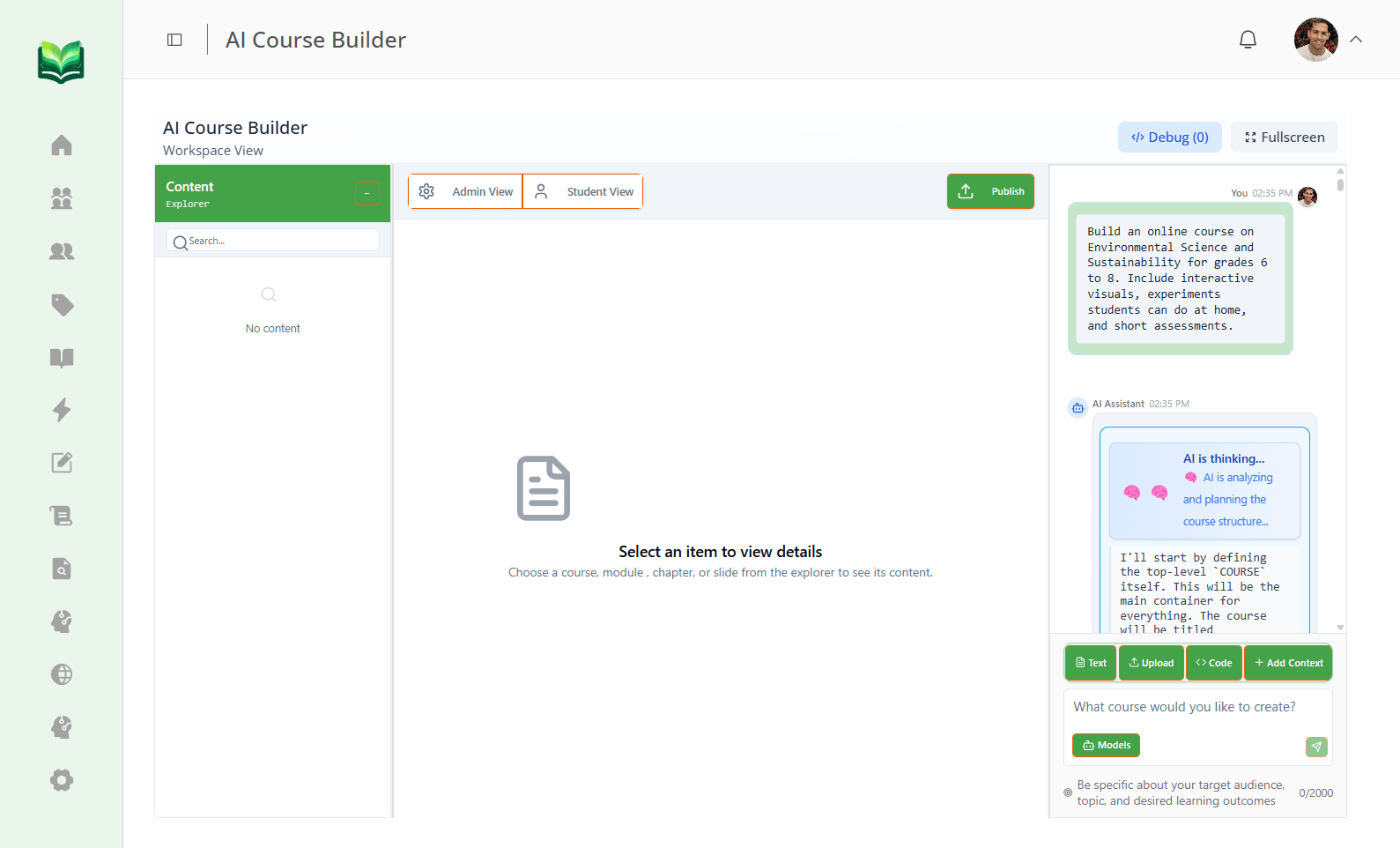
The Next-Gen Approach: AI-Powered Creation
Modern platforms like Vacademy use Generative AI to create entire courses in minutes—not weeks. Simply provide a topic, learning objectives, or upload existing content, and the AI generates structured courses complete with lessons, quizzes, and learning paths.
Limitation 2: Zero Automation for Daily Operations
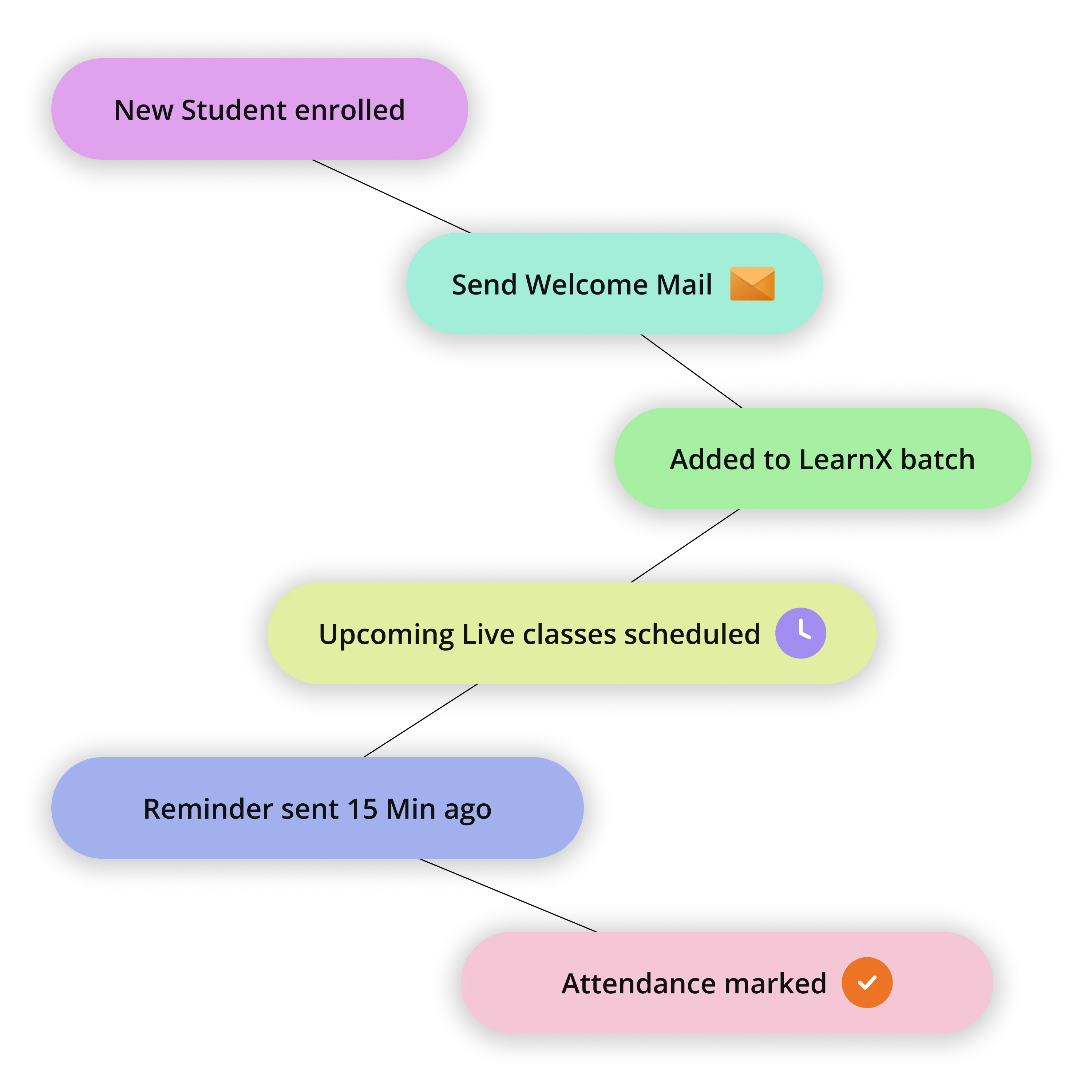
Attendance tracking. Payment reminders. Enrollment confirmations. Progress reports. Certificate generation. In traditional LMS platforms, all of these require manual intervention. Every. Single. Time.
This isn't just inefficient—it's a massive operational bottleneck. Educators become administrators, spending more time on spreadsheets than on students. The result? Burnout, errors, and missed opportunities.
Traditional LMS Reality
- •Manual attendance marking after every session
- •Chasing payments through emails and calls
- •Individual student reminders sent one by one
- •Certificate creation requires design software
- •Progress reports compiled manually in spreadsheets
Next-Gen Platform Reality
- •Automatic attendance from live session data
- •Automated payment reminders via Email/WhatsApp
- •Scheduled notifications based on learner behavior
- •Auto-generated certificates upon course completion
- •Real-time analytics dashboards with instant reports
Limitation 3: The Fragmented Tool Nightmare
Here's a typical educator's tech stack in 2025: one tool for LMS, another for live classes, a third for payments, a fourth for CRM, a fifth for email campaigns, and spreadsheets to tie it all together. This isn't a solution—it's chaos.
When systems don't talk to each other, data lives in silos. Learner information gets duplicated. Errors multiply. And educators waste precious hours switching between platforms and manually syncing information.
From Fragmentation to Unification
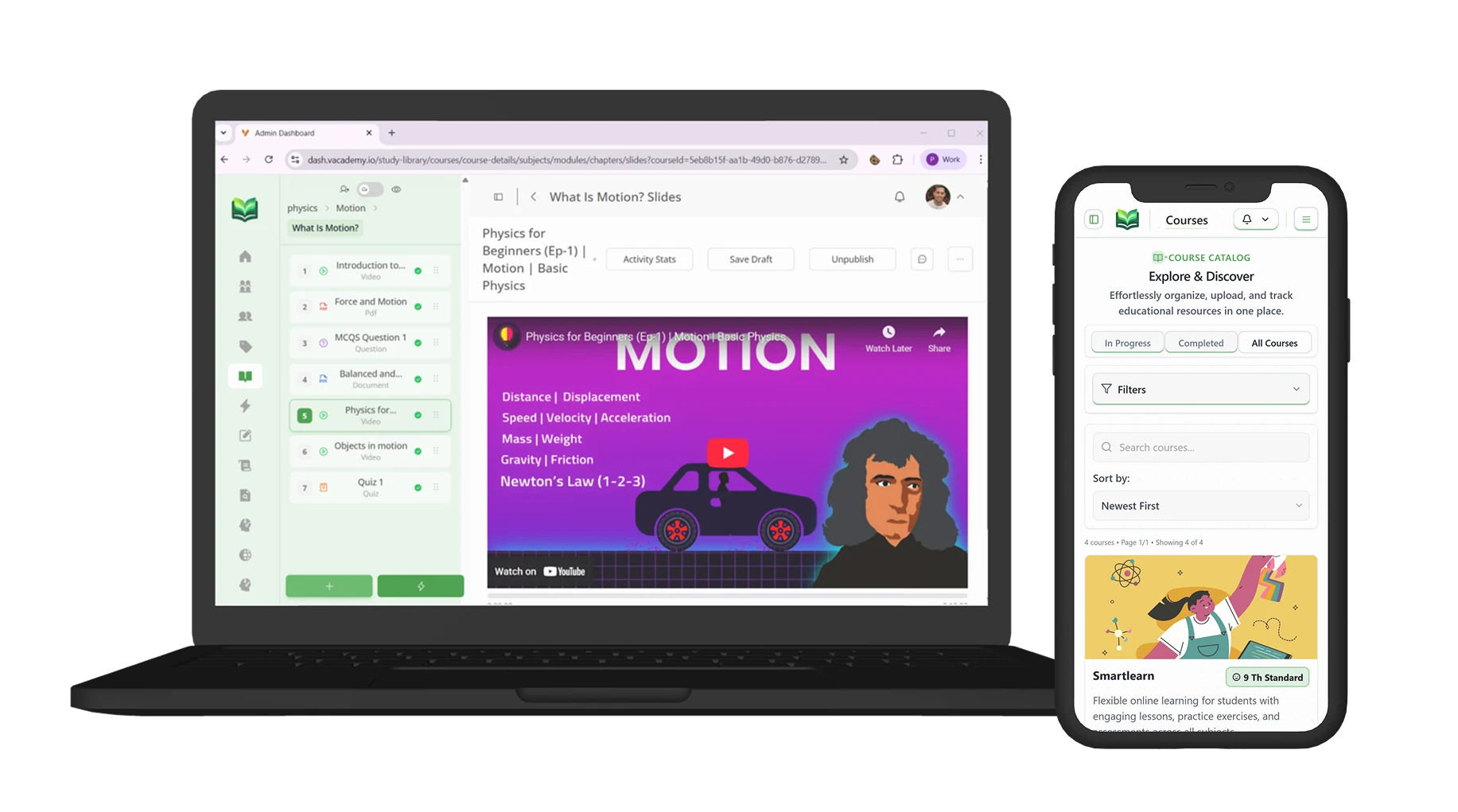
Next-generation platforms like Vacademy unify everything educators need into a single ecosystem. Course management, live classes, assessments, CRM, payments, and analytics—all seamlessly integrated.
Limitation 4: Static Content in a Dynamic World
Traditional LMS platforms are glorified file storage systems. You upload a video, add some text, create a quiz, and that's it. The content sits there—unchanged, unoptimized, and increasingly irrelevant as the world moves on.
There's no intelligence behind the content delivery. Every learner sees the same material in the same order, regardless of their skill level, learning pace, or prior knowledge. High performers are bored; struggling learners fall further behind.
Intelligent, Adaptive Learning
AI-powered platforms transform static content into dynamic learning experiences. They analyze learner behavior, adjust content difficulty, and personalize recommendations—ensuring every learner gets exactly what they need.
- AI-generated questions adapted to learner level
- Personalized learning paths based on performance
- Smart content recommendations for weak areas
- Real-time insights on learner engagement
Limitation 5: Assessments as a Box-Ticking Exercise
In most traditional LMS platforms, assessments are basic—simple MCQs with no depth, no analytics, and no insight. Creating meaningful evaluations takes hours of manual work, and the results tell you very little about actual learner understanding.
There's no question bank intelligence, no difficulty calibration, no automated grading for subjective answers, and certainly no AI-assisted evaluation. The result? Assessments that test memory, not mastery.
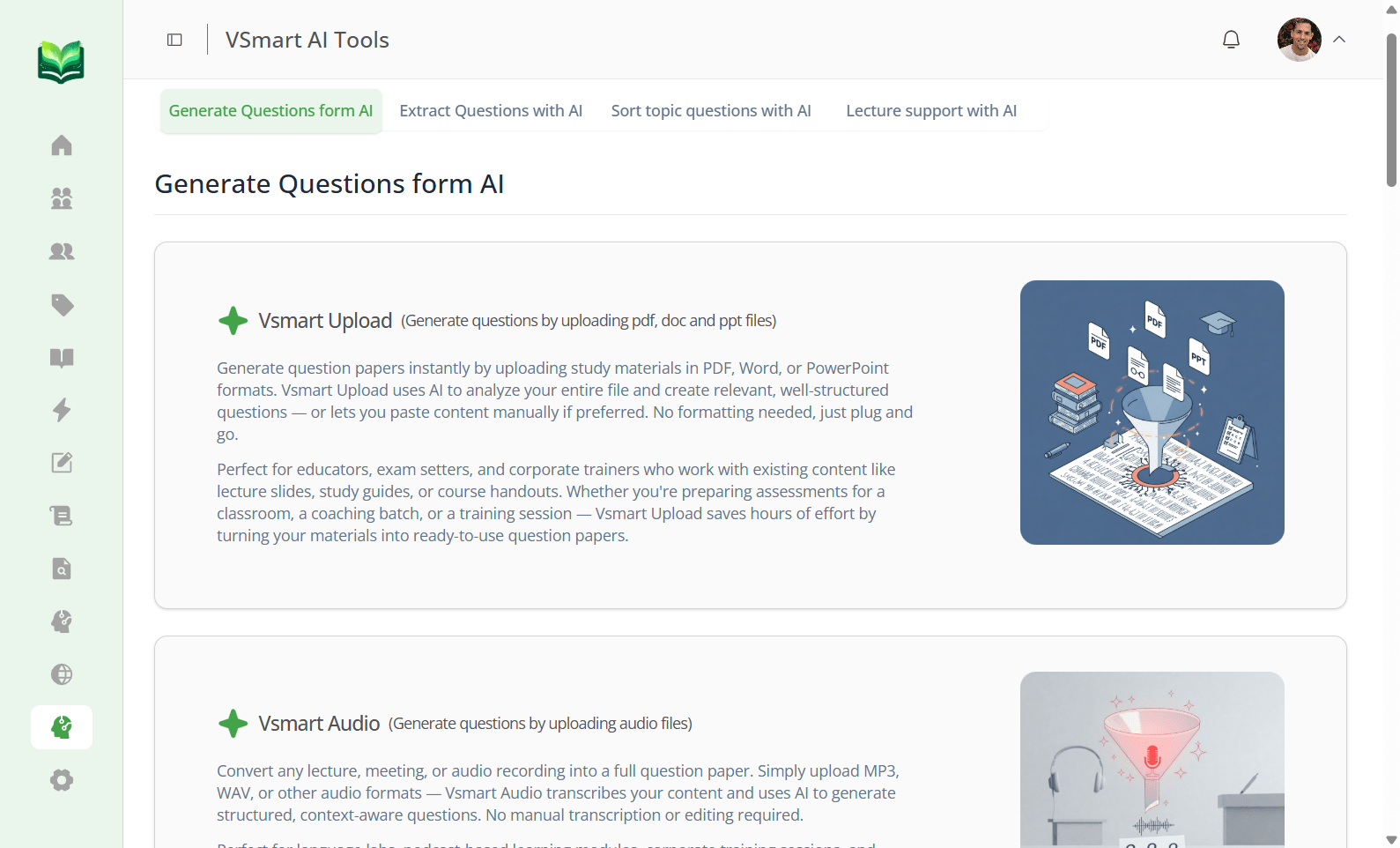
AI Question Generation
Generate questions from any content—PDFs, audio, video, or text. Multiple formats including MCQ, numerical, descriptive, and comprehension.
Deep Analytics
Question-level insights, difficulty analysis, time-per-question metrics, and strong/weak area identification for every learner.
AI-Assisted Evaluation
Automated grading for subjective answers with customizable rubrics, keyword detection, and intelligent scoring.
Limitation 6: No Built-In Growth Engine
Traditional LMS platforms stop at content delivery. But for educators and institutions trying to grow, delivery is just the beginning. You need to attract new learners, convert leads, retain existing students, and collect payments—all of which require separate tools, separate costs, and separate headaches.
There's no lead capture, no drip campaigns, no referral programs, no payment follow-ups, and no marketing automation. Educators are left to figure out growth on their own, often juggling multiple disconnected platforms.
Built-In Growth Tools in Modern Platforms
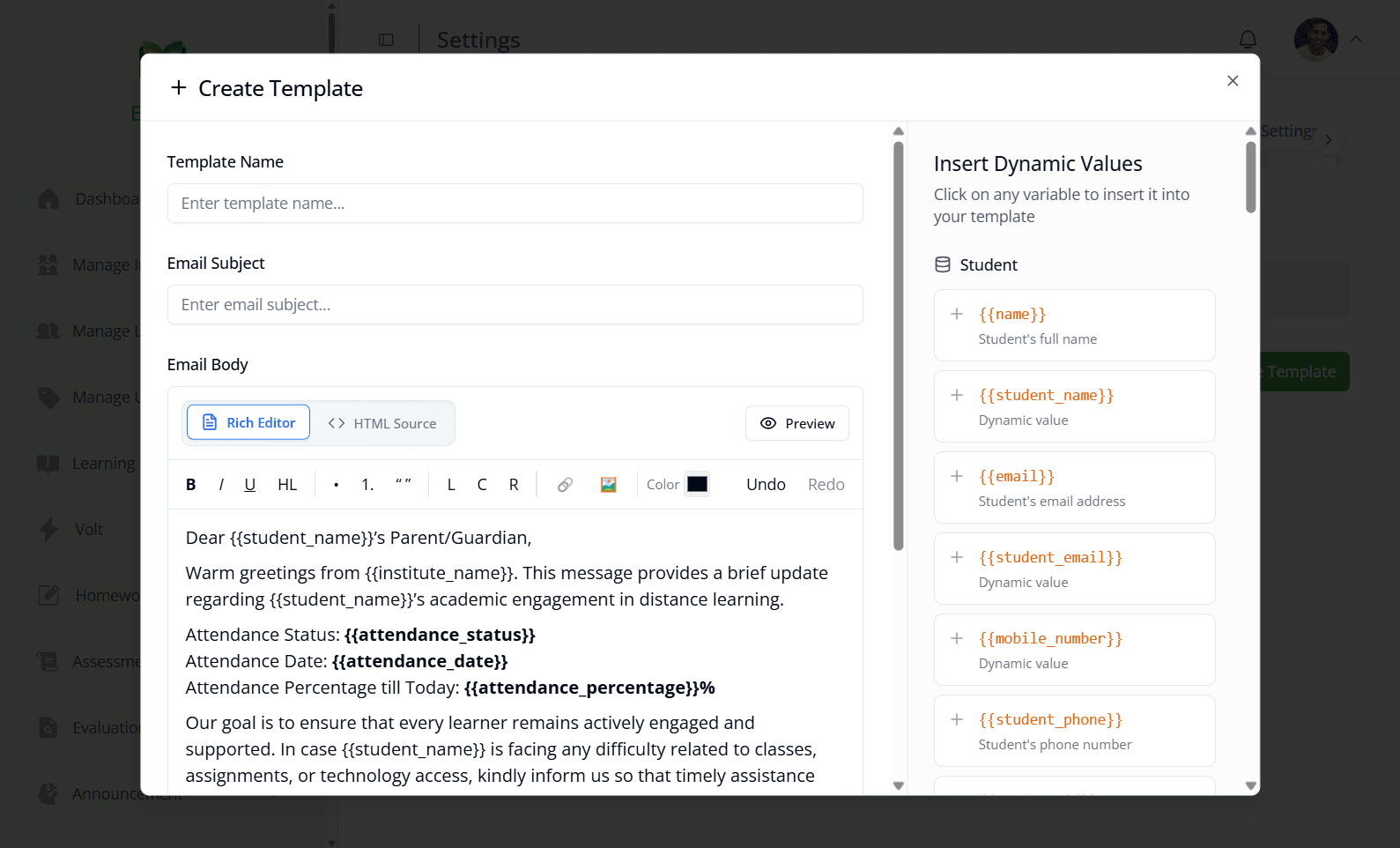
Integrated CRM
Lead capture, segmentation, and automated follow-ups built right into the platform.
Email & WhatsApp Campaigns
Automated communication flows for onboarding, reminders, and re-engagement.
Payment Automation
Automated invoicing, payment reminders, and subscription management.
Referral Programs
Built-in referral and reward systems to turn learners into advocates.
Limitation 7: Desktop-First in a Mobile-First World
In 2025, over 65% of learners access educational content on mobile devices. Yet most traditional LMS platforms were designed for desktop browsers, with mobile as an afterthought. The result? Clunky interfaces, broken layouts, and frustrated learners.
Modern learners expect seamless experiences across devices. They want to start a lesson on their laptop, continue on their phone during a commute, and complete it on a tablet at home. Traditional LMS platforms simply can't deliver this fluidity.
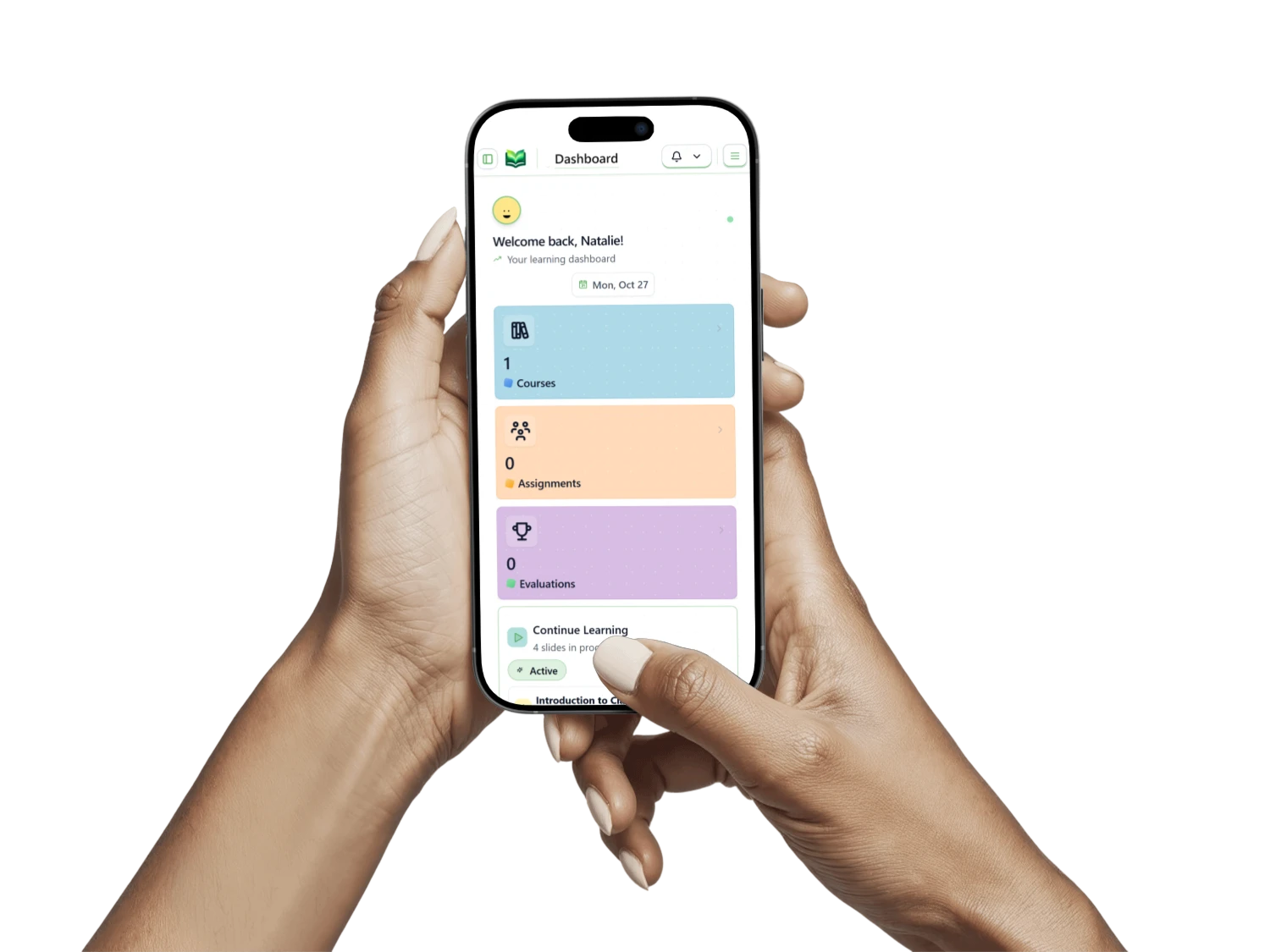
Mobile-First Learning Experience
Next-gen platforms are designed mobile-first, ensuring learners get a native-quality experience on any device. With dedicated mobile apps and responsive design, learning happens anywhere, anytime.
- Native mobile apps for iOS and Android
- Offline access to course content
- Push notifications for live sessions & deadlines
- Seamless progress sync across devices
Traditional LMS vs. Next-Gen Platforms at a Glance
| Feature | Traditional LMS | Next-Gen (Vacademy) |
|---|---|---|
| Course Creation | Manual (weeks) | AI-Powered (minutes) |
| Content Personalization | One-size-fits-all | Adaptive & personalized |
| Assessment Generation | Manual question creation | AI auto-generation |
| Automation | None or minimal | Comprehensive workflows |
| CRM & Marketing | Requires external tools | Built-in CRM & campaigns |
| Live Classes | External integration | Native with auto-attendance |
| Payments | External payment gateways | Integrated payments & invoicing |
| Mobile Experience | Responsive (basic) | Mobile-first native apps |
| Analytics | Basic completion data | Deep insights & AI predictions |
| Support & Scalability | Limited | Cloud-native, unlimited scale |
Vacademy: The Learning Operating System for 2025 and Beyond
Vacademy isn't just another LMS—it's a complete Learning Operating System that solves every limitation of traditional platforms. Built from the ground up for the modern education landscape, Vacademy combines AI intelligence, comprehensive automation, and a unified ecosystem to transform how educators teach and learners grow.
AI Co-Pilot
Generate courses, quizzes, and lecture plans in minutes, not weeks.
Full Automation
Automated attendance, payments, reminders, and communication.
Unified Platform
LMS, CRM, payments, live classes, and analytics in one place.
Scale Effortlessly
From solo educators to large institutions—one platform, unlimited growth.
Ready to Leave Traditional LMS Behind?
Join thousands of educators and organizations who've made the switch. See how Vacademy can transform your teaching operations, save countless hours, and deliver better learning outcomes.
Frequently Asked Questions
Can I migrate my existing courses from a traditional LMS to Vacademy?
Yes! Vacademy provides migration support and tools to help you transfer existing content. Our team can assist with bulk imports, and you can also use our AI to enhance and restructure your existing materials during the migration process.
How much time can I realistically save with an AI-powered platform?
Based on our users' feedback, educators save 40-60 hours per month on average. Course creation time drops from weeks to hours. Assessment creation goes from manual entry to AI generation in minutes. Automated attendance and communication eliminate hours of daily admin work.
Is Vacademy suitable for small educators or just large institutions?
Vacademy is designed for everyone—from individual tutors and small coaching centers to large institutions and corporate training departments. Our pricing and features scale with your needs, so you only pay for what you use.
How does the built-in CRM compare to standalone CRM tools?
While standalone CRMs offer more general-purpose features, Vacademy's built-in CRM is purpose-built for education. It includes lead tracking, automated enrollment workflows, payment follow-ups, and communication tools specifically designed for educators—without the complexity or cost of external integrations.
What about data security and compliance?
Vacademy takes security seriously. We're cloud-native with enterprise-grade encryption, role-based access controls, and compliance with major data protection regulations. Your data is yours—we never share or sell learner information.
Can traditional LMS platforms be upgraded with these features?
While some traditional LMS platforms are adding AI and automation features, they're often bolted-on solutions that don't integrate seamlessly. Vacademy was built from the ground up with AI and automation as core capabilities, not afterthoughts—resulting in a more cohesive, powerful experience.